Why I Stopped Buying Cheap and Started Buying Right
- Carissa Secchiari
- May 3
- 3 min read


There was a version of me who bought a lot of things. Quickly. On sale. Because the price made it feel like a good decision.
A throw pillow that pilled after one wash. A rug that shed for six months straight. A lamp that looked fine in the photo and sad in real life. A jacket that fit perfectly in the store and aged ten years in a single season.
None of it was expensive. That was the problem.
Cheap things cost more over time
This is not a revolutionary idea. But it's one that takes a while to actually feel in your bones. When you're replacing the same item every eighteen months, you're not saving money — you're just paying in installments with extra frustration on the side.
The more interesting thing I noticed: cheap things also cost you space. They take up physical room in your home and mental room in your head. You keep them because you just bought them. You feel guilty getting rid of them because they weren't cheap enough to be guilt-free but weren't good enough to love. So they stay. And your space gets heavier.
It's not about luxury. It's about longevity.
I want to be clear: this is not an argument for expensive things. Some of my favorite pieces in my home cost almost nothing. A chair I found at an estate sale. A vintage lamp from a thrift store that has more character than anything I've ever bought new.
What I'm talking about is intentional buying. Asking, before you buy anything: is this made to last? Not just physically — is it the kind of thing I'll still want in ten years? Does the material, the construction, the design hold up to time? Or is it trendy, flimsy, and bound to feel dated by next spring? That question alone has saved me more money than any sale ever did.
I also started thinking about what things are made of
This was a quieter shift, but it changed how I shop for everything. The more I learned about what goes into fast furniture, fast fashion, and fast home goods — the dyes, the flame retardants, the synthetic fillers — the less I wanted to bring them into my home.
Not out of fear. Out of preference. I'd rather have fewer things made of real materials — solid wood, linen, cotton, wool, ceramic — than a full house of things I don't fully trust.

Bedding was one of the first places I made the switch. You're in it for eight hours a night, so what it's made of actually matters. I landed on these organic sheets from Anthropologie, 100% organic cotton, the kind that gets softer every single wash instead of pilling and thinning out like cheaper sets do. A real difference you feel immediately.
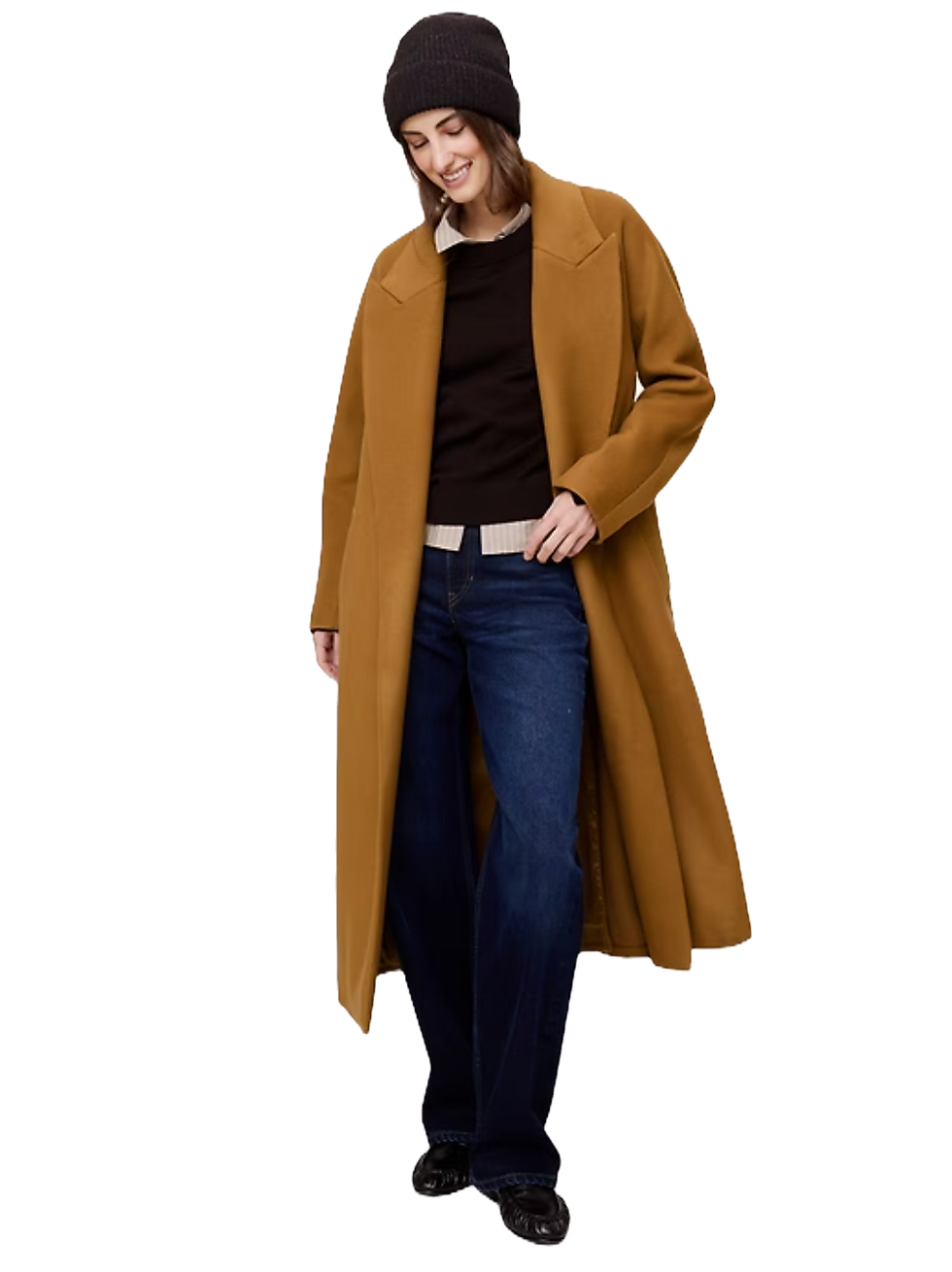
The same logic applies to your wardrobe. I used to buy a new coat almost every year, never expensive enough to be precious about, never good enough to actually love. Now I own one that I reach for constantly. This Italian wool-cashmere wrap coat from Banana Republic is the version of that for me. Natural fibers, a cut that doesn't chase trends, the kind of piece that looks better the more you wear it. It's what buying right actually looks like in practice.
Vintage became my best friend for this reason, too. Something that's already forty years old and still standing has already done the off-gassing. It's proven itself. And it usually has better bones than anything made today at the same price point.
What this actually looks like in practice
I buy less. I research more. I wait longer. I've started keeping a list of things I actually need, and I let them sit there for a while before I buy them. Sometimes I stop wanting them. Sometimes I find the exact right version. Either way, I don't regret it.
My home has fewer things now than it did three years ago. But every single thing in it feels like it was chosen. Because it was.
That's the goal. Not less. Just better.


Comments